Navigating the EPA’s 2026 PFAS Guidance: Why ‘Destruction’ Must Replace ‘Disposal’
The 2026 Shift: Why the Guidance Matters
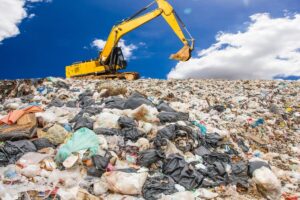
The 2026 update is sharper and more urgent than previous versions. It emphasizes that while landfilling and underground injection remain options, they are under intensifying scrutiny. New data integrated into the 2026 guidance shows that landfills may result in higher PFAS releases than previously modeled, even at RCRA-permitted facilities. The agency’s stance is evolving to prioritize destruction technologies that minimize the “long-tail” liability associated with storing “forever chemicals” in the ground.
The Problem with “Disposal”
The updated guidance acknowledges a harsh reality: burying PFAS doesn’t make it disappear.
- The Leachate Challenge: Even in advanced landfills, PFAS migrates into leachate, creating an ongoing management issue that never truly resolves.
- Liability Creep: As PFAS is increasingly categorized under hazardous substance frameworks, the liability for “disposed” waste can follow the generator for decades.
- Regulatory Preference: The EPA is moving toward a framework where decision-makers must justify the use of disposal over destruction, particularly as the science behind destruction becomes more robust.
The Case for Destruction: HTL vs. Legacy Thermal Methods
The 2026 guidance highlights that thermal treatment remains a priority, but with a critical caveat: it must be performed under conditions that ensure complete mineralization.
This is where Clean Stream Fuels and our proprietary Hydrothermal Liquefaction (HTL) technology set a new industry benchmark. While conventional incineration often struggles to achieve the residence times and specific temperatures needed to break the carbon-fluorine bond without risk of incomplete combustion, our HTL process utilizes subcritical and supercritical water environments to ensure total molecular breakdown.
- Breaking the Bond: By operating in a dense water-phase environment, our HTL process facilitates the cleavage of even the most resilient carbon-fluorine bonds, converting PFAS into simple mineral salts.
- Closed-Loop Safety: Unlike open-air incineration, which requires massive air pollution control systems, HTL is a closed, liquid-phase process. It drastically reduces the risk of PFAS aerosolization—a key concern in the 2026 EPA guidelines.
- A Circular Solution: Clean Stream Fuels goes beyond simple destruction. By recovering high-value biocrude from waste, we transform a regulatory burden into a renewable energy asset. Furthermore, our advanced water-recovery systems treat the process byproduct, producing clear, clean water that can be reintroduced into industrial systems—effectively offsetting the need for potable water in cooling or process applications.
The Bottom Line: Moving Forward
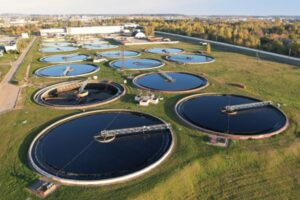
The 2026 EPA guidance makes it clear that the most effective way to protect your organization is to remove PFAS from the waste stream permanently. For facilities managing biosolids or industrial sludge, “disposal” is no longer a safety net—it is a rising liability.
The time to pivot is now. By adopting destruction-based technologies like those offered by Clean Stream Fuels, you aren’t just following guidance—you are future-proofing your facility against the next wave of stricter PFAS regulations while simultaneously reclaiming vital water and energy resources.