As December 2025 draws to a close, corporations around the globe are finalizing their Environmental, Social, and Governance (ESG) disclosures. For water treatment centers, refineries, and industrial partners, the “E” (Environmental) pillar often presents the greatest challenge, particularly in demonstrating measurable progress on waste reduction and decarbonization.
The solution is not just better waste management, but total waste transformation. Clean Stream Fuels’ Hydrothermal Liquefaction (HTL) technology, which converts organic waste streams into valuable biocrude, offers three key, verifiable metrics that can dramatically elevate your company’s 2025 ESG rating and secure critical investor confidence.
[Image of Hydrothermal Liquefaction process diagram]
1. The Circular Economy Metric: Eliminating Waste Liability
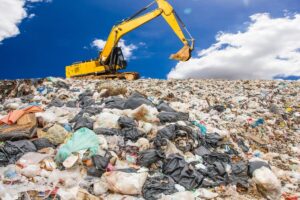
ESG frameworks in 2025, especially those aligning with EU and global standards, place increasing emphasis on Circular Economy and Resource Use. Traditional disposal methods—such as landfilling or incineration of challenging wastes like wet biomass and biosolids—are viewed as liabilities that generate future risk.
The Biocrude Advantage:
- KPI Improvement: HTL shifts wet biomass, biosolids and other organic waste from a waste stream (negative KPI) to a valuable product (positive KPI). This provides a tangible boost to your Waste Diversion Rate and demonstrates commitment to the circular economy—a critical focus area for investors.
- Measurable Impact: Instead of merely reporting disposal volumes, you can report the precise volume of waste converted into a sustainable energy source, providing a powerful, quantifiable narrative for your annual sustainability report.
2. Decarbonization Advantage: Crushing Scope 1 & 3 Emissions
In 2025, the pressure to accurately track and reduce Scope 3 emissions (indirect emissions from a company’s value chain) is immense. For high-volume waste producers, the transportation of sludge and other material to distant disposal sites is a significant, yet often overlooked, Scope 3 liability.
The Biocrude Advantage:
- Reducing Scope 3 (Transportation): Clean Stream Fuels specializes in on-site HTL installation. By processing waste directly at the source, you immediately eliminate the thousands of miles of trucking and associated fuel consumption required for off-site disposal. This provides a clear, data-backed reduction in your high-impact Scope 3 Category 1-9 emissions.
- Reducing Scope 1 & 2 (Energy Replacement): The resulting biocrude and high-energy briquettes are used to fuel your own operations, displacing the purchase of fossil fuels. This directly lowers your utility consumption (Scope 2) and any on-site fuel use (Scope 1), showing concrete progress toward net-zero targets.
3. The Renewable Energy KPI: Generating Value On-Site
Investors are actively seeking companies that generate their own power from renewable sources, moving beyond simply purchasing carbon offsets. Generating renewable energy from waste is one of the most compelling stories in the energy transition.
The Biocrude Advantage:
- Verified Renewable Asset: Biocrude derived from organic waste is a form of renewable fuel. When reported, it contributes directly to the percentage of renewable energy used in your operations.
- Financial & Reputational Returns: Beyond reporting, the economic benefit is clear: you transform a cost center (waste disposal) into a revenue center (valuable biocrude). This linkage between environmental stewardship and financial resilience is what differentiates ESG leaders in 2025.